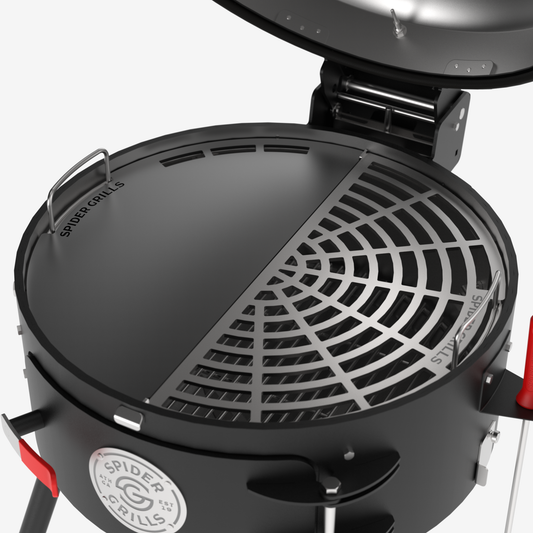
Smash burgers with crisp edges. Eggs and bacon over charcoal. Vegetables browned on hot steel. Your Spider Grills Griddle Plate adds more ways to cook over live fire—and a little care keeps it ready for the next meal.
Before your first cook, you’ll need to season the carbon steel surface. After that, the routine is simple: scrape, wipe, dry, and lightly oil.
Watch: Griddle Seasoning and Care
Follow along as we walk through seasoning your griddle and cleaning up after a cook.
Why Season Your Griddle?
Seasoning uses heat to bond thin layers of oil to the steel, building a protective cooking surface that helps food release more easily. That finish develops and darkens with regular use and proper care.
Your Griddle Plate ships with a light protective coating. Remove that coating and season the steel before cooking.
How to Season Your Griddle Before First Use
1. Wash and dry thoroughly
Scrub the entire griddle with warm water, dish soap, and a stiff sponge or scrub pad to remove the factory coating. Rinse, then dry immediately and completely.
Save soap for this initial cleaning or a full seasoning reset. For everyday cleanup, follow the routine below.
2. Apply a thin layer of seasoning wax
Using an applicator pad or paper towels, spread a thin, even layer of seasoning wax over the entire surface, including the edges.
Wipe away any excess. The coating should look almost dry, with no pools or thick streaks. Too much wax or oil can leave a sticky finish.
3. Heat over charcoal
Place the griddle on your grill over lit charcoal. Set the grill to 450–500°F and heat for roughly one hour to bake on the seasoning.
4. Cool and repeat
Let the griddle cool, then repeat the thin coating and heating steps for the best results.
How to Clean Your Griddle After Cooking
Clean while the griddle is still warm, when food residue is easier to remove. Use heat-resistant gloves and appropriate utensils when working around hot steel.
1. Scrape away food and excess oil
Use a metal spatula or griddle scraper to remove food debris and leftover cooking oil.
2. Wipe the surface
Wipe with a paper towel or cloth. For stuck-on food, add a small amount of water to the warm surface, then scrape and wipe again.
3. Dry completely
Remove all moisture thoroughly. Do not let the griddle air-dry.
4. Apply a light coat of oil
While the griddle is still warm, use a paper towel to apply a very thin coat of oil. This helps protect the steel between cooks.
Skip soap during routine cleaning, as directed in the griddle manual.
When Should You Re-Season?
If the surface looks dull or gray, or food starts sticking, it’s time to refresh the seasoning. Apply another thin coat of seasoning wax and repeat the heating process.
The finish will change as you cook. A well-maintained griddle naturally darkens with use.
What if rust appears?
Scrub off the oxidation with a scouring pad. Soap is appropriate here because you’ll be rebuilding the seasoning.
Dry the griddle completely, then repeat the full seasoning process, starting with the initial wash.
How to Store Your Griddle
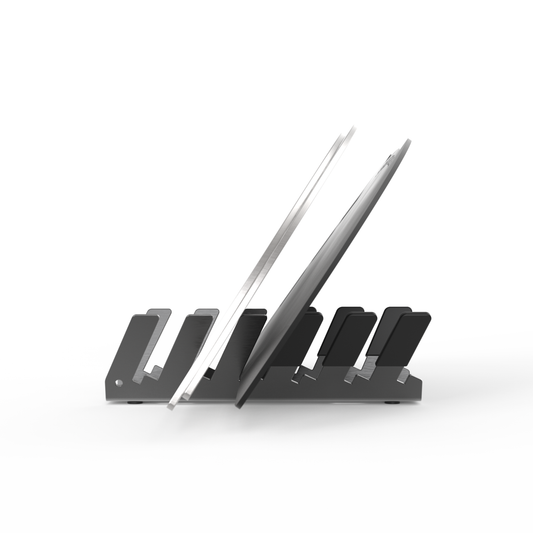
Before storing, make sure the griddle is completely cool, clean, dry, and lightly oiled. Keep it in a dry location.
In humid conditions, take extra care to protect the steel from moisture. The manual recommends wrapping the cooled, prepared griddle in paper towel followed by plastic, or maintaining a light coat of oil as a moisture barrier.
Before Your Next Cook
Give the griddle time to preheat before adding food for an even cooking temperature.
If you’re using two Griddle Plates on your Huntsman®, move the pit probe to the front location as recommended in the manual for more accurate temperature monitoring.
Keep up the simple cleanup routine after each meal, and your griddle will be ready for breakfast, burgers, and whatever hits the steel next.